Nature's Slow Rebuild on Arrawatta Station

Over the past three weeks, Arrawatta Station has received 46mm of rain. After four long months without moisture, the landscape is slowly breathing again. Grass seeds that have been lying dormant in the soil are finally emerging, and a soft green hue is returning across the paddocks.
It is the first real green we have seen since summer. But a few weeks of rain does not undo four months of dry, and the way we respond now matters more than the relief we feel.
Why the delay?
Even with this welcome rain, our commercial herd will not return to full pasture roaming for another six to eight weeks.
If cattle are put out too early, they graze off those tender new shoots before the plants have had time to build a strong root system. The result is a fragile pasture that cannot withstand heat, grazing pressure, or the next dry spell.
Our goal is a resilient, diverse pasture with maximum ground cover. A landscape that protects itself, feeds the herd, and regenerates year after year. Allowing the plants time to establish deep, robust roots is the foundation of our whole system. It is the difference between a quick green flush that disappears at the first hot week, and pasture that holds its ground through the seasons.

We are not out of trouble yet
The long deficit of rain has left the landscape without any real reserves. The soil profile is still dry at depth, and our dams and farm waterways remain parched. This recent 46mm has freshened the surface, but it has not rebuilt the stored water volume the country needs to properly recover.
We are now counting on the winter pattern to do its part. The forecast suggests a return to the light, steady rains typical of the New England Tablelands through the cooler months. If those arrive, they will help rebuild soil moisture, support pasture establishment, and slowly recharge the system from the ground up.
This is the part of farming that asks for patience. You cannot force a landscape to recover on your timeline. You can only manage it well, protect what you have built, and give it the conditions to heal.

Life moves in rhythm with the natural world
While we manage cattle across the landscape, nature is quietly managing her own resources. Trees are a vital part of a healthy, functioning system.
This old tree is nearing the end of its life, and she has already begun the process of succession. Notice the fallen limb, the second large branch to drop in recent months, and the ring of young seedlings thriving around her base. She is feeding them as she declines, supporting the next generation of saplings that will one day take her place. It is nature's way of ensuring continuity: even as her time in the landscape draws to a close, she is actively preparing for what comes next.

And the Native Aberdeen Angus girls are doing their part too, quietly carrying the next generation through these trying conditions. We welcomed a new arrival yesterday: a tiny calf, curled up and fast asleep after the excitement of birth, now snoozing peacefully in the warmth of the winter sun. New life continues, even in a landscape still rebuilding itself.
What this has to do with the beef on your plate
It is easy to talk about regenerative farming when conditions are good. The real test is what you do when they are not.
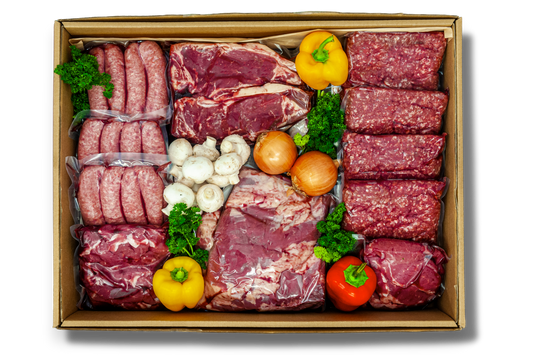
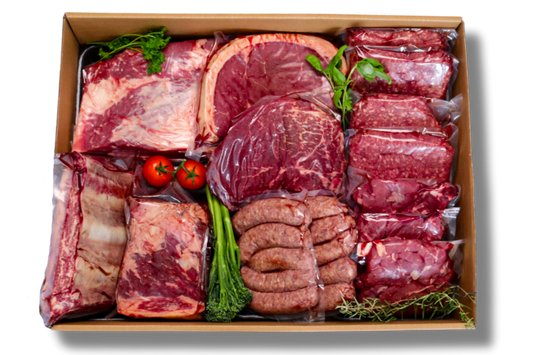
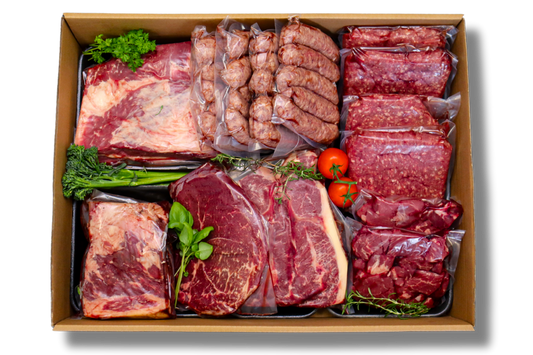
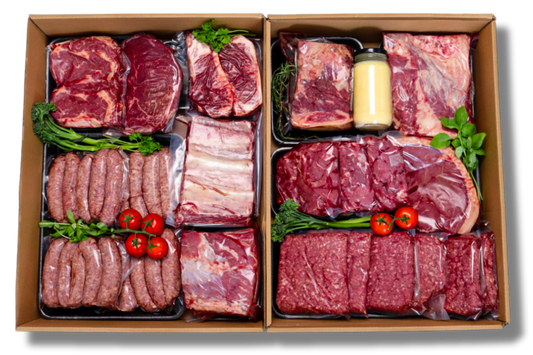
When the season turns hard, the easy path is to graze pastures to bare dirt and finish cattle fast on grain in a feedlot. We do not do that. We pull stock back to protect ground cover, we wait for roots to establish before we graze, and we keep our Native Aberdeen Angus on grass for life. No grain. No hormones. No antibiotics. The discipline you are reading about here is the same discipline that produces beef worth putting on your family's table.
That is the work behind every box we send. We are grateful to everyone who chooses to be part of it.