Food Security Begins in the Paddock
Food Security Begins in the Paddock
A question worth asking at the checkout
In my last few articles, I've been writing about the foundations of health: how nourishment before conception shapes future generations, how the gut begins to form early, and how the brain and nervous system depend on good food from the very start. All of that work points to one simple truth: nourishment matters deeply.
So the next question follows naturally. What kind of food system will make that nourishment reliably possible in the years ahead?
It is a question increasing numbers of Australians are starting to ask.
Food security is not someone else's problem
For a long time, many of us have probably assumed food security was someone else's concern. We are, after all, a country of productive farmland, strong agricultural exports, and relative abundance. According to CSIRO, Australia produces around $800 billion worth of food, feeding approximately 100 million people here and overseas.
Yet ABS data from 2023 tells a different story at the household level. One in eight Australian households experienced food insecurity that year. In a country this bountiful, that figure deserves honest attention.
This does not mean Australia is on the brink of running out of food. But it does mean we should stop treating food security as a distant abstraction.

Quantity is not the same as quality
The modern food environment has been built around convenience, uniformity, and speed. And in many ways, it has delivered. Supermarket shelves are full. Food is accessible. Prices, until recently, were relatively stable.
But convenience on its own does not build healthy children, strong bodies, resilient minds, or thriving communities.
Nourishing food is different. It carries integrity. It reflects the health of the soil it came from, the condition of the landscape it grew on, and the care taken in how it was produced.
The quality of your food still matters just as much as the quantity. And the distinction between the two is becoming harder to ignore.
The Australian Government is paying attention
Following the disruptions of COVID, the Australian Government has begun developing a National Food Security Strategy through the Department of Agriculture, Fisheries and Forestry (DAFF). Community consultation has surfaced several themes with direct relevance to producers like Native Angus Beef and other non-industrialised local operations:
- Regional abattoir closures, with recommendations to support local processing capacity
- Climate-resilient, regenerative farming as a foundation for healthy soil, water, and ecosystems
- Prioritising nutrition and food quality over mere calorie access
- More dependable logistics and cold chain transport
- Investment in local and regional food systems to strengthen both producers and national food security
These are not fringe ideas. They are emerging as central pillars of national food policy.
Your food dollar is a decision
Here is what often gets overlooked. The food budget you manage each week is not neutral. It directs, at a grassroots level, how soils are nurtured, how farms manage their operations, and which food systems grow stronger.
Every household shopping decision either consolidates a food system built on convenience and speed, or supports one built on nourishment, transparency, and resilience.
That is not activism. It is just how supply chains work.
When you choose food from a producer you can trace, from land that is being actively regenerated, from an operation that is transparent about how it farms and what it feeds, you are reinforcing a food system that is less susceptible to global shocks. You are supporting local and regional economies. And you are choosing nutrient density over empty volume.

Where Native Angus Beef fits
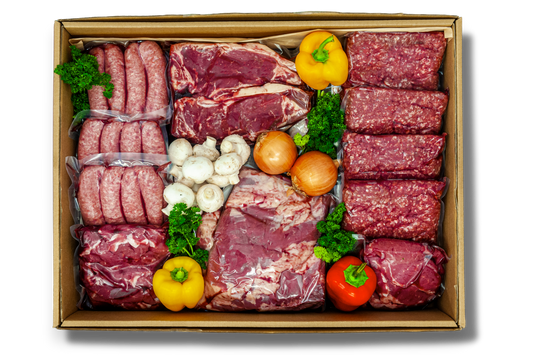
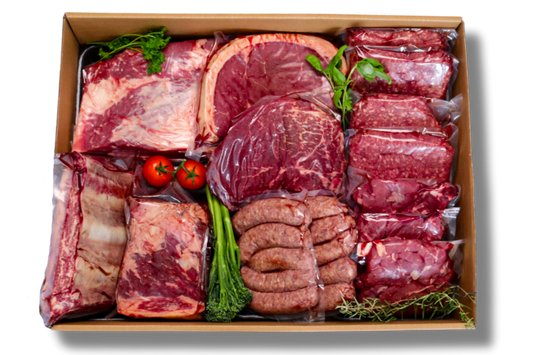
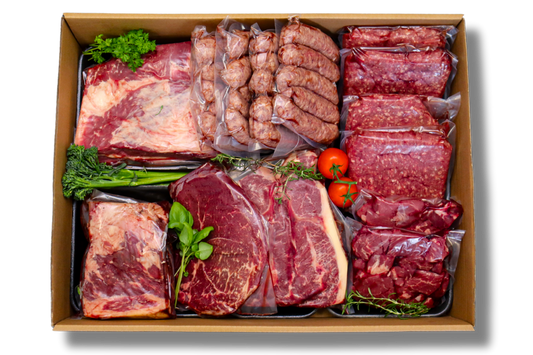
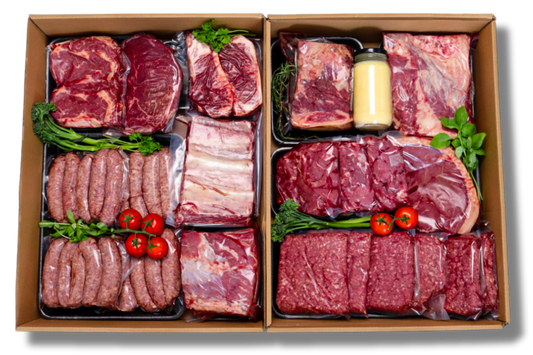
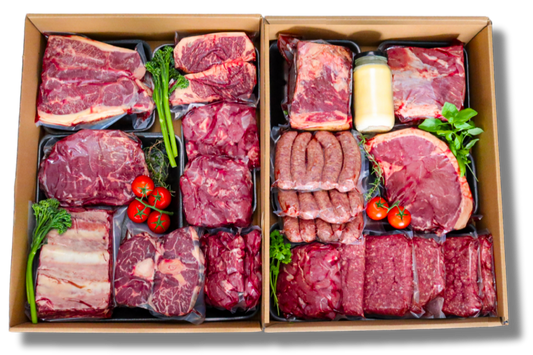
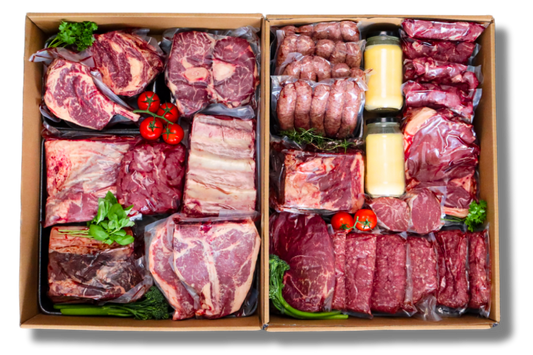
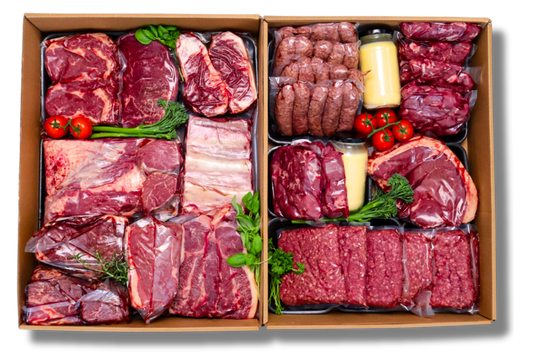
Our direct-to-consumer model exists precisely because of these realities. By connecting our farm at Arrawatta Station directly to households in QLD, NSW, and VIC, we shorten the supply chain, maintain full transparency over how our cattle are raised and fed, and keep revenue flowing through regional communities rather than through multinational distribution networks.
Our cattle are 100% grass-fed and grass-finished. No grain. No hormones. No antibiotics. The land is managed regeneratively, verified by the Savory Institute's Ecological Outcome Verification and Sustainable Table. Independent nutrition testing confirms higher omega-3s, CLA, and an improved omega-6 to omega-3 ratio compared to grain-fed beef.
This is not a marketing angle. It is how we farm, and it is the kind of food system worth strengthening.
The deeper question
If recent years have taught us anything, it is that a stable food system should never be taken for granted.
The deeper question is what kind of food system we want to strengthen and pass on. One built on short-term efficiency and increasing fragility? Or one built on nourishment, resilience, fairness, and care for the land?
For me, the answer begins where good food always begins: with the health of the landscape and the integrity of the people producing from it.
Just cattle, grass, soil, sunshine and time.