Fat That Reflects the Season
Packing orders at the warehouse lately, we've noticed something that we wanted to share.
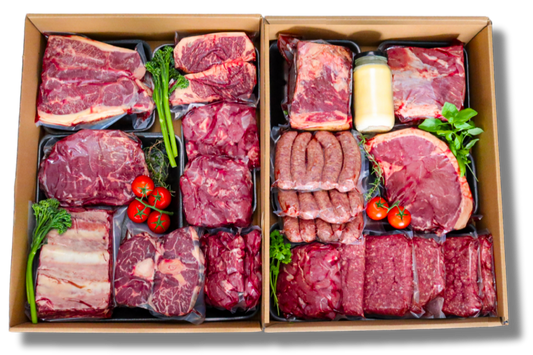
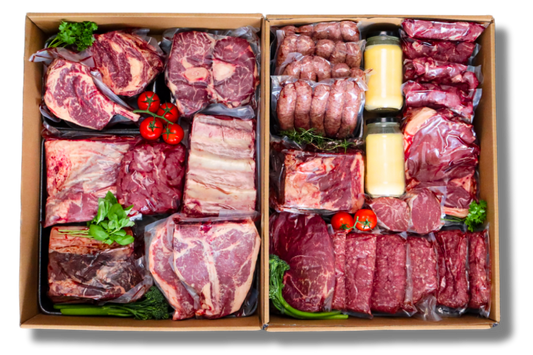
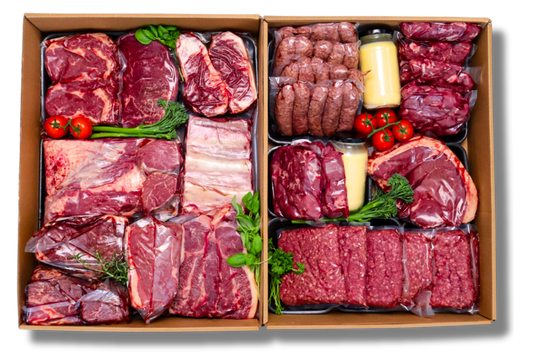
Summer has quite literally changed the look of our beef.
Up on the New England Tablelands, this season has been generous. Long days, strong sunlight, and steady rainfall have kept the paddocks vibrant and green. When pasture grows well, it is rich in chlorophyll and naturally occurring plant pigments such as beta carotene. These compounds are created through photosynthesis, powered by sunlight and healthy soil.
And they do not stay in the plant.
Why summer fat is more golden
Carotenoids, the same pigments that give carrots and butter their colour, are fat soluble. When cattle graze on fresh, actively growing pasture, they absorb these pigments into their own fat stores. Over time, this produces a deeper yellow hue in the fat.
It's not a sign of age, it's not a flaw, and it's not something added to our beef.
It's simply a reflection of season, sunlight, and pasture diversity.
As autumn approaches and grass growth slows, the greens soften and the intensity of those pigments naturally reduces. The fat becomes lighter in colour. This seasonal shift is completely natural in cattle raised on real pasture.
What that colour tells you
For us, that golden tone is a badge of honour and a sign of a truly pasture based system. It signals:
✅ High levels of naturally occurring antioxidants
✅ Fat soluble vitamins created through sunlight and living plants
✅ A diet grown in soil, not formulated in a feedlot
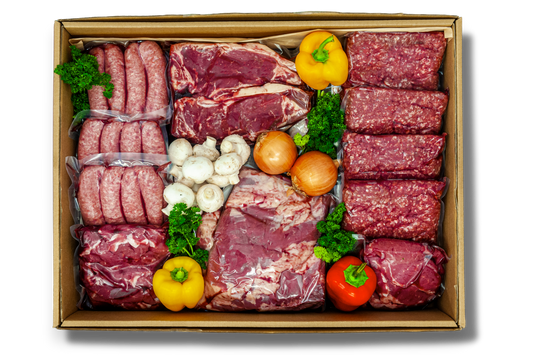
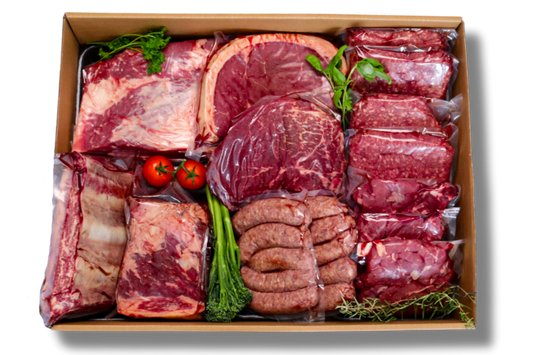
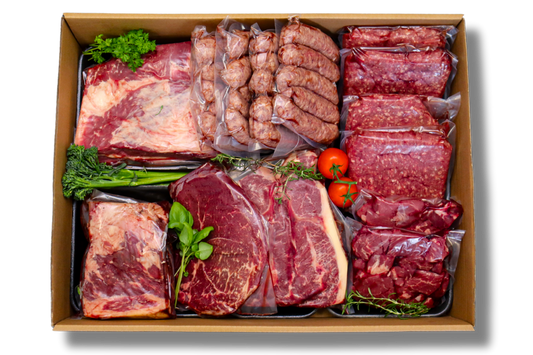
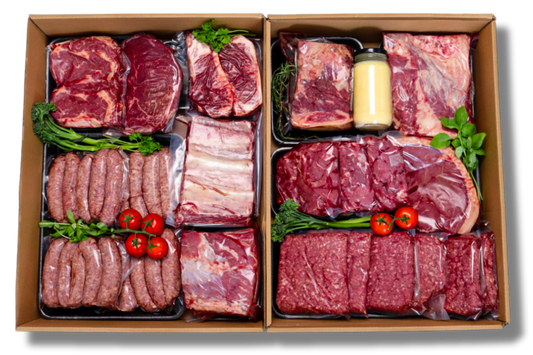
You will see this distinctive yellow tint most clearly in our prime cuts, diced beef, and our fattier mince packs. In summer, even 90% lean mince can carry a subtle yellow tint that slightly softens the deep red colour of the meat.
It is nature’s opposite to industrial uniformity. Beef raised in controlled feeding systems is often engineered for visual consistency. Ours reflects the land, the weather, and the biology of the season.
From soil to animal to you
The nourishment in beef begins well before it reaches your plate. It starts in biologically active soil, moves into diverse pasture plants, and is then transferred into the animal.
When cattle graze on living grasses under open skies, the result is beef that carries the imprint of its environment. In summer, that imprint is visible.
The richness of the fat is not just about flavour, although you will taste it. It is a reminder that food grown in healthy landscapes behaves differently.
And that is exactly how it should be.
At Native Angus Beef, we see seasonal variation as a strength. It tells the story of cattle raised as animals are designed to be raised, on pasture, in rhythm with the land.
When we honour the soil and the animal, the food honours us back.